What Is Ibogaine Treatment for Opioid Addiction?
Ibogaine is a naturally occurring psychoactive compound that resets opioid receptors to their pre-addiction state in a single medically supervised session. Unlike methadone or suboxone, ibogaine is not a maintenance drug. It eliminates acute withdrawal symptoms within hours and promotes long-term neuroplasticity through GDNF upregulation, allowing the brain to heal from years of opioid-induced damage.
- Eliminates acute opioid withdrawal in 12-24 hours
- Resets mu-opioid receptor sensitivity without substitution
- Noribogaine metabolite provides months of craving suppression
- Promotes GDNF release for neural repair and neuroplasticity
- Single treatment protocol, not lifelong maintenance
Understanding Opioid Dependency
The Neuroscience Behind Why Willpower Is Not Enough
Opioid addiction, encompassing both prescription painkillers and illicit substances like heroin and fentanyl, is a profound public health crisis. These substances bind to specific receptors in the brain to reduce pain but also produce feelings of euphoria, leading to their high potential for abuse. Long-term opioid use progressively downregulates mu-opioid receptors, depletes endogenous endorphin production, and restructures the mesolimbic reward system so that the brain's baseline for "normal" becomes chemically impossible without the substance.
This is why conventional detox, even when medically managed, produces weeks of physical agony followed by months of psychological craving. Traditional treatments such as Methadone and Suboxone are designed to manage withdrawal symptoms, but they often lead to long-term dependency and do not address the root causes. Ibogaine addresses the neurological rewrite itself, not merely the symptoms of it.
Substances We Treat
How Ibogaine Addresses Each Opioid Dependency
Heroin & Street Opioids
Heroin dependency rewires reward circuitry in ways that willpower alone cannot overcome. Ibogaine addresses the underlying neurological architecture, the receptor desensitization and dopaminergic disruption, not merely the surface symptoms.
Prescription Opioids
Oxycodone, hydrocodone, Percocet, and morphine dependencies, whether following legitimate medical use or not, respond to ibogaine's mechanism with the same effectiveness as illicit opioid addiction.
Kratom Dependency
Kratom withdrawal is frequently underestimated by physicians and overestimated in duration by patients. Ibogaine eliminates the withdrawal period and disrupts the dependency cycle, providing relief where gradual tapering has failed.
The Mechanism
How Ibogaine Resets Opioid Dependency at the Source
Ibogaine and its primary metabolite noribogaine act on mu-opioid receptors, the same sites targeted by opioid drugs, but without producing the same dependency cycle. Within hours of administration, it modulates receptor sensitivity, restores natural endorphin signaling capacity, and interrupts the acute withdrawal process at its neurochemical source. Noribogaine remains active in the body for several months post-treatment, binding to mu-opioid, serotonin transporter, and kappa-opioid receptors to prevent cravings and stabilize mood without euphoric effects.
Simultaneously, ibogaine promotes release of GDNF (glial cell line-derived neurotrophic factor), a protein that supports neuronal survival and growth, enhancing the brain's ability to reorganize and repair itself. This neuroplastic effect is crucial for healing the damage caused by long-term opioid use. The post-treatment window, often called the "afterglow", is characterized by dramatically reduced craving and an atypical clarity of mind. Most patients report that the withdrawal symptoms they anticipated simply did not arrive.
MindScape's opioid protocol (10 to 14 days) begins with two ibogaine TA booster doses administered prior to the primary HCl flood session. These initial TA administrations serve a precise pharmacological function: they initiate noribogaine accumulation in plasma and begin mu-opioid receptor modulation before the full therapeutic dose is delivered. Noribogaine's approximately 28-hour half-life means that even two pre-flood administrations establish measurable receptor occupancy, suppressing early withdrawal onset and priming CYP2D6-mediated metabolism for optimal flood-dose bioavailability. This pre-loading ensures the flood dose encounters a partially stabilized receptor environment rather than a system in acute withdrawal, improving both cardiac safety and therapeutic depth.
Opioid Withdrawal: With Ibogaine vs Without
The difference between conventional opioid detox and ibogaine-assisted treatment is not incremental. It is categorical. Here is what the withdrawal timeline actually looks like.
Anxiety escalates. Muscle aching, restless legs, runny nose, sweating begin. Intense psychological craving.
Full withdrawal onset. Severe nausea, vomiting, diarrhea, body-wide pain. Sleep impossible. Most patients describe this as the worst physical suffering of their lives.
Peak withdrawal. Uncontrollable muscle spasms, hot/cold flashes, severe insomnia, dehydration, elevated heart rate. Many patients relapse during this window.
Acute symptoms begin to ease but remain significant. Depression, fatigue, and anxiety dominate. Appetite absent.
Post-acute withdrawal (PAWS): persistent insomnia, anhedonia, depression, cognitive fog, and intense drug craving lasting weeks to months.
TA booster doses build noribogaine levels. Mild warmth or buzzing. Normal appetite, sleep, and mobility. Withdrawal onset is suppressed before it begins.
Primary HCl flood dose administered. Deep visionary and introspective experience (18-24 hours). Opioid receptors resetting in real time. Withdrawal symptoms absent or dramatically muted.
Acute experience resolving. Patients report clarity, lightness, absence of craving. Mobility returning, appetite returning. The withdrawal they feared simply did not arrive.
Walking, eating normally. Emotional openness and motivation. Post-treatment EKG clear. Integration therapy begins, and on programs of 10 days or longer your microdose supply goes home with you for the phase your physician schedules.
Noribogaine metabolite active for months, sustaining craving suppression and neuroplasticity. Weekly video sessions with psychologist. No PAWS. The afterglow window supports lasting behavioral change.
Clinical Outcomes
Outcomes: What We Measure, And What Is Published
The question every prospective patient deserves an honest answer to is: does this actually work? Here is what can be said without inventing anything. Published studies consistently report resolution of acute opioid withdrawal within 24 to 48 hours after a single ibogaine treatment in a majority of patients, and Köck et al. (2022) systematically reviewed 24 studies covering 705 patients, documenting consistent suppression of opioid withdrawal and craving. Brown & Alper (2018), a prospective observational cohort of 30 opioid-dependent patients in which 50% reported no opioid use in the prior 30 days at one-month follow-up, with drug-use improvements sustained through twelve months, remains the strongest single published signal to date.
At MindScape, more than 1,000 guests have been treated since 2019 with zero serious complications recorded, a direct result of mandatory cardiac screening, comprehensive medication review, and continuous physician oversight during every treatment. Every guest is scored on the Clinical Opiate Withdrawal Scale and validated craving scales from admission through follow-up, and our own cohort aggregates publish at mindscaperetreat.com/outcomes once at least 20 people hold paired data, never before. Outcomes are never guaranteed, recovery requires continued commitment to integration and behavioral change, and the neurological foundation ibogaine provides is unlike anything available in conventional addiction medicine.
Treatment Comparison
Ibogaine vs Conventional Opioid Treatment
| Ibogaine | Methadone / Suboxone | |
|---|---|---|
| Treatment duration | Single 10-12 day protocol | Ongoing daily maintenance (months to years) |
| Withdrawal experience | Dramatically reduced or eliminated within hours | Managed but persistent during taper |
| Mechanism | Resets mu-opioid receptor sensitivity | Substitutes one opioid agonist for another |
| Dependency risk | Non-addictive, no ongoing dosing | Creates new physical dependency |
| Craving suppression | Noribogaine active for months post-treatment | Only while actively taking medication |
| Neuroplasticity | Promotes GDNF for neural repair | No neuroplastic effect documented |
| Psychological component | Deep introspective experience addresses root trauma | No psychotherapeutic mechanism |
Every guest in the opioid protocol is measured, not surveyed. See how we report outcomes and what publishes when. For a detailed look at how opioid withdrawal is scored through the protocol, read our opioid addiction case study. Want to understand the full timeline? Our treatment duration guide explains what each day of the protocol involves.
Clinical Protocol
What to Expect: Five Stages
Free Consultation
Speak candidly with our care team about your history, substances, and what prior treatments have or have not delivered. No pressure, no judgment, only honest guidance.
Medical Screening
Comprehensive bloodwork, EKG cardiac evaluation, liver panel, and physician intake ensure complete safety clearance before your protocol begins. Opioid patients receive specialized pre-treatment preparation.
Custom Protocol Design
Our medical director designs your personalized ibogaine dosing, timing, and supplemental NAD+ support, calibrated to your dependency profile, physiology, and whether a microdose or macrodose program is appropriate.
Treatment in Cozumel
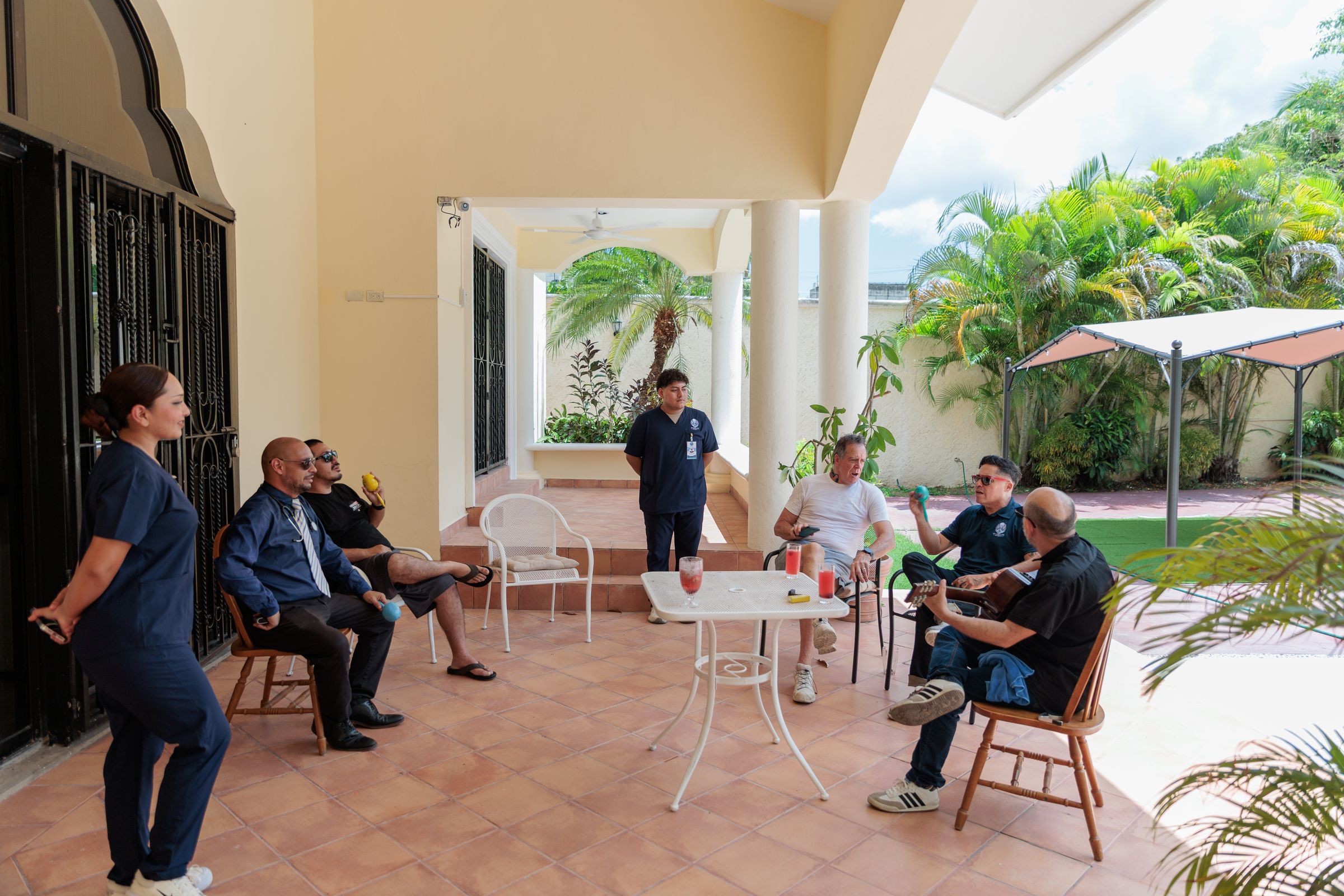
Arrive at our intimate, medically-equipped sanctuary on Cozumel Island. Physician and nurse oversight runs continuously throughout your session and recovery period. You are never unsupervised.
Integration & Aftercare
Depart with a structured 90-day integration framework, scheduled coaching calls, and access to our private patient community. Ibogaine opens the door; integration is what sustains long-term freedom.
Common Questions
Opioid Treatment. Frequently Asked Questions
Program Investment
Transparent, All-Inclusive Pricing
5-MeO-DMT (Bufo) Day Session
from $1,450
Single-day guided 5-MeO-DMT session: $1,450 at Casa Selva or The Hacienda, $2,200 private at the Oceanfront Residence.
Ibogaine Protocol
$13,500
10 to 14 day all-inclusive program. Full opioid detox and neurochemical reset.
All pricing includes accommodations, meals, medical supervision, pre-treatment preparation, NAD+ infusions, and 90-day integration support. Programs of 10 days or longer include a one-month aftercare microdose supply at discharge. No hidden fees.
How Does Ibogaine Compare to Other Treatments?
Explore Ibogaine Treatment Resources
Looking for opioid addiction treatment accessible from your state? MindScape Retreat treats patients from across the US with direct flights to Cozumel. Find ibogaine treatment near you.
Related Treatments
Explore Related Treatment Programs
Not sure if you're ready? Take our confidential self-assessment or explore our clinical outcomes.
Find Out if You're a Candidate
Start with a free, confidential medical pre-screening, reviewed personally by our clinical team, with no obligation. Every opioid dependence case is screened individually.
Start Free Medical Pre-Screening →Start a Confidential Conversation
100% Confidential · No Obligation · Response Within 24 Hours
Get our Medical Credentials & Patient Safety Packet
15 pages: our physicians and licenses, cardiac safety standards, emergency protocols, travel guidance, and answers to the questions families ask most.
No spam, ever. Or download it directly without sharing your email.
100% Confidential · No Obligation · Available 7 Days a Week
Primary References
Our protocols align with the primary scientific literature, including the MAPS Ibogaine Investigator's Brochure (July 2026), NIDA's psychedelic & dissociative drugs research, and registered trials on ClinicalTrials.gov. Ibogaine remains investigational; we pair published evidence with measured, real-world outcome tracking.
Measured & safe
Recovery you can track. Safety you can trust.
Our data platform measures your progress before, during, and after your stay, while our medical team looks after your safety in person at every step. The same picture that guides your care is the one that shows it worked.
Validated instruments build your baseline before you travel.
Our medical team is with you around your session, and a chest monitor strap streams your vitals to them whenever you're in our care, on technology we built ourselves.
Your progress re-scored against your baseline, in your portal.
Every MindScape treatment program includes a guided 5-MeO-DMT (Bufo) ceremony, part of the all-inclusive price, not an add-on.
Taking prescription medication? Some medications need a supervised taper or washout period before ibogaine. Check your medications against our interaction guide, or review the contraindications. Never stop or change a medication without your prescriber. The transition plan is designed with our medical team before you travel.
Precision dosing
Your main dose is measured, not estimated
Before the main session, we give a short series of low, sub-psychoactive ibogaine TA boosters. Each one is a measurement. Ibogaine and its long-lived metabolite noribogaine both affect the heart's hERG potassium channel, and that effect is dose-dependent, so instead of predicting how you will respond we observe it directly at doses far below a full session. Your main dose is then chosen from your own cardiac response and the margin you have left.
No ibogaine given. 12-lead ECG, electrolytes and liver panel establish the starting point. A baseline outside safe limits stops the programme here.
These are the measurements the protocol is built around. The trace above is a schematic used to explain the method; it is not a recording of a patient, and the values shown are illustrative rather than results.
How the booster protocol works for opioid dependency →